

The Hydration Discussion
When it comes to sourdough: is higher hydration better than lower hydration?
When I first started baking I didn’t really understand that hydration was a thing. Let alone something that bakers have very different opinions on. Some go hard for high hydration doughs, pushing the water to the max. While others almost aggressively vouch for stiffer doughs and lower hydration.
But is there a right or wrong answer?
Yes and no.
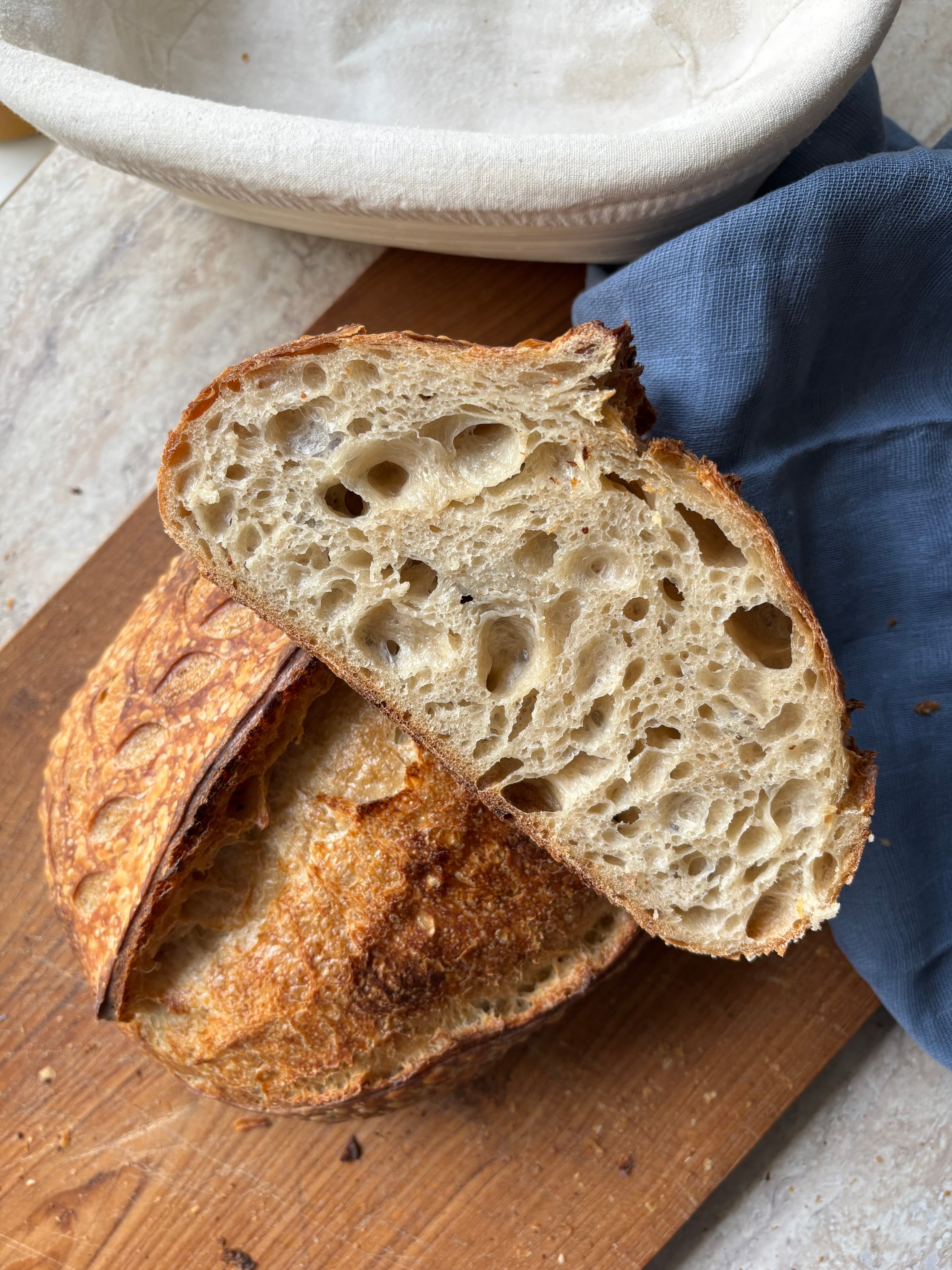
Why I say “Yes”: Every flour will have an ideal hydration level, where its full potential in extensibility and elasticity is reached. For some types that could be 65%, and for others 100%. Whole grains and rye flours NEED more water, if not you end up with a dry lump that doesn’t resemble bread.
Try doing a 65% hydration on a 100% rye. It will be more like dry cement than bread. On the other hand all purpose flour mixed at 100% hydration will be more like a floury, goopy soup than anything cohesive.
So its all relative.
When it comes to flour types, yes, there is a right and wrong answer in terms of what hydration level is best.
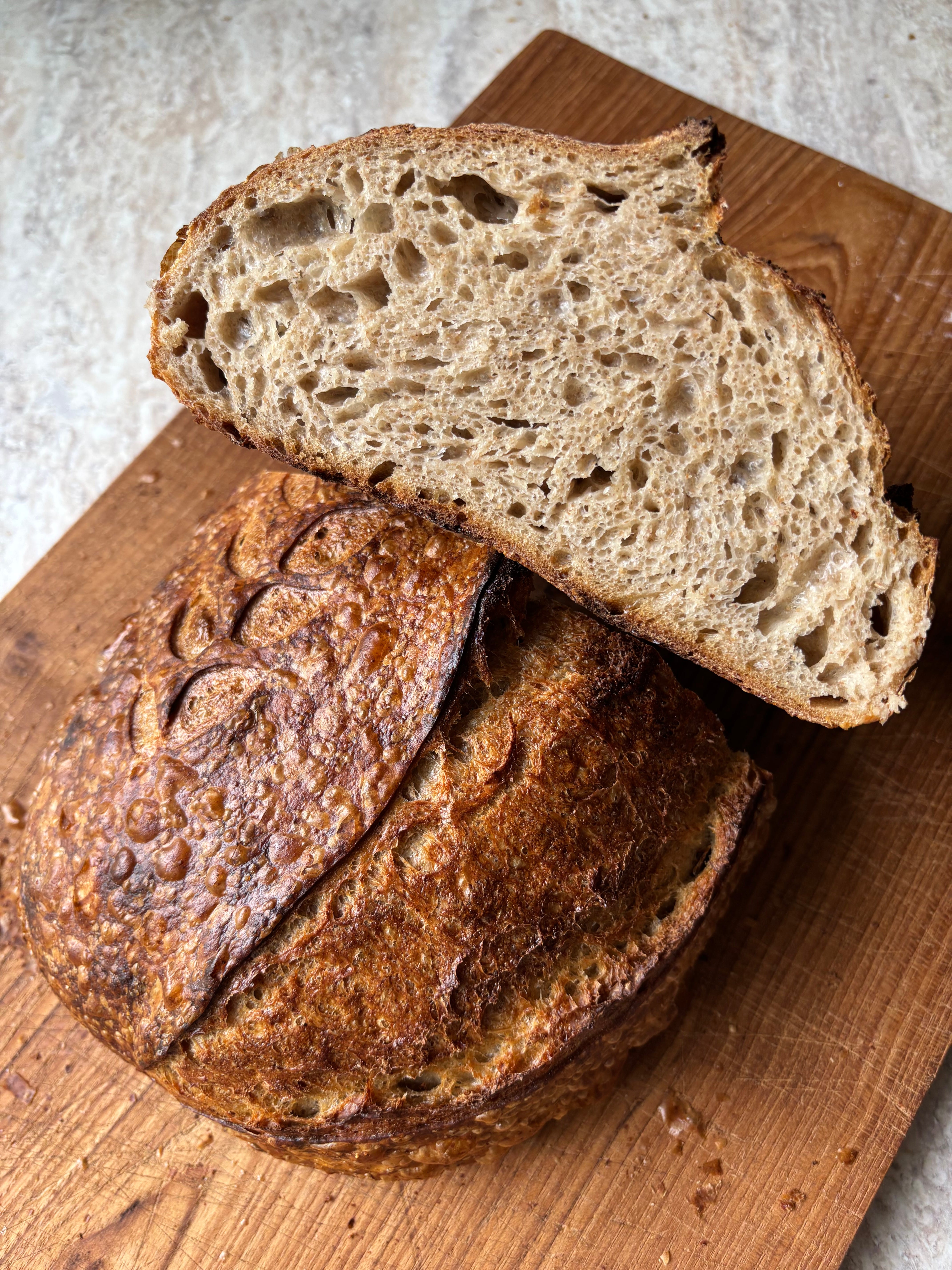
BUT! The window for that hydration level is often quite big.
That is where we get on to why I said “No”.
Because most flours will still work really well, and just give different results if you go above or below the “ideal hydration”. Less water will give you a tighter crumb. More water will give you a more open crumb (up to a point).
This gives you a bigger playing field, and is also the reason to why social media is full of people with strong opinions about why one hydration level is better than the other. They all make great bread, but they strive for different results and aesthetics, and therefore use hydration as a means to get there.
It is no secret that a lower hydration dough is much easier to handle, and is more forgiving. A lot of people also prefer that it gives a classic sandwich crumb that doesn’t have big holes for the butter or jam to fall through. Higher hydration doughs can be more custardy on the insides, with a crumb that is delicate and full of holes - for all the spreads to fall through or load up.
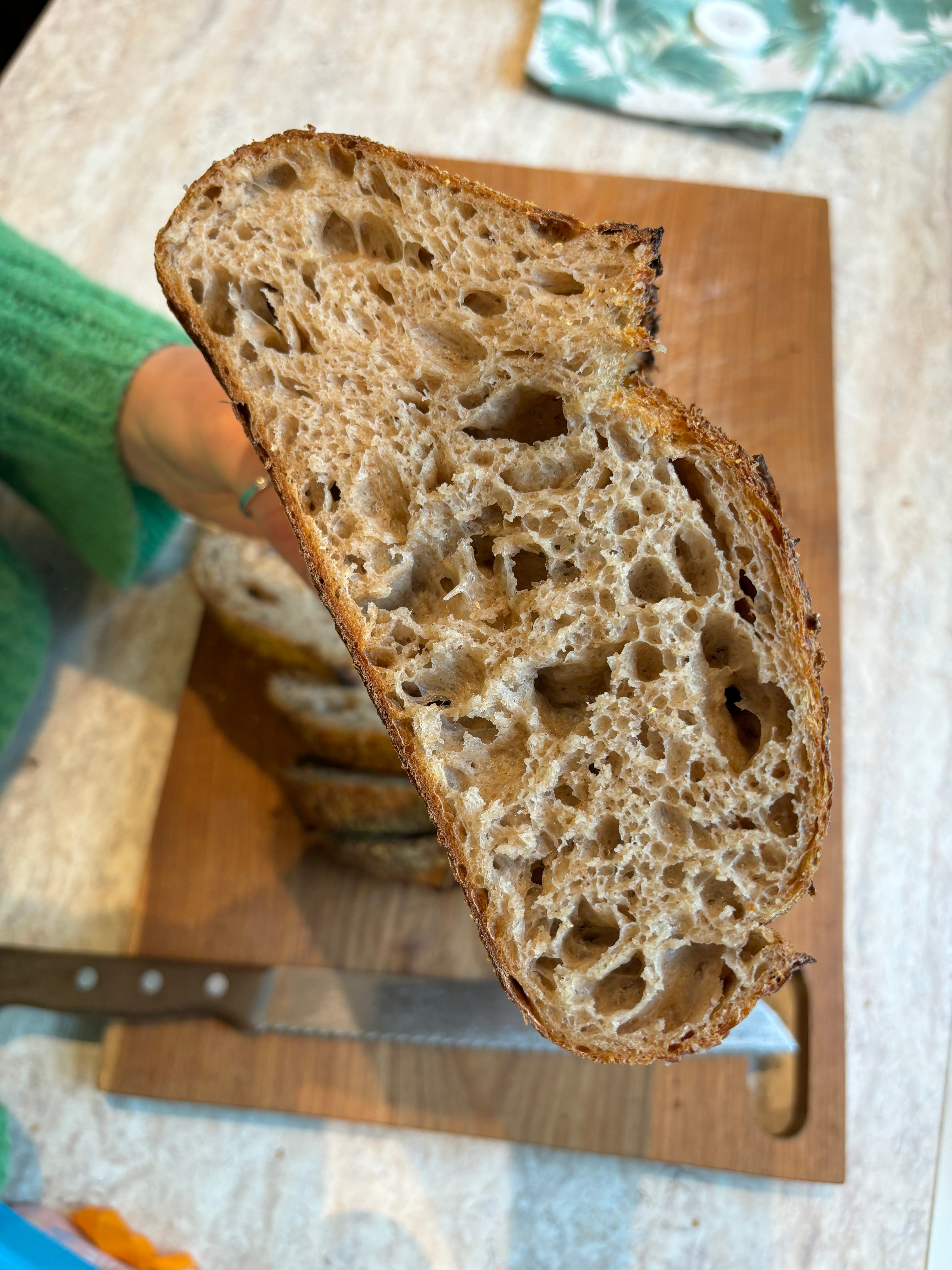
The point is - these are different preferences, not right or wrong answers.
And it does not mean that one is better than the other.
The joy and frustration with sourdough baking is that while it is extremely simple and straight forward in its basic principles, it also has endless opportunities for creativity, and is immensely flexible.
And it is very dependent on the surroundings, climate, ingredients and of course handling. So as annoying as it is, there is no right or wrong answer. It is a matter of getting to know your ingredients, understanding what to feel for in your dough, and how to bring out the best qualities in a loaf that YOU strive for.
I, personally, love a slightly higher hydrated loaf, and often stick around 80%. But I also rarely bake with all white flour, so my whole grains need the extra water to not become dry. That doesn’t mean that it is a better way - just that it is my preferred way.
If you have any questions regarding hydration, flours or sourdough baking in general, leave them in the comments and I’ll answer them there or in an upcoming post! :)
-Em
Keen to learn more about flours and hydration?
I have just done a flour series on my instagram where I compare 10 different flours so you don’t have to. I’ve also shared a few tips on what I look for in a dough when I say to “add extra water if necessary”. I’ll link them all below:
Flour series Ep. 1 - Sifted white flours: Strong white, wheat, Tipo 00 and spelt
Flour series Ep. 2 - Whole grains: rye, wheat and spelt
Flour series Ep. 3 - Ancient grains: emmer, spelt and svedjerug (ancient nordic rye)